
Class Description
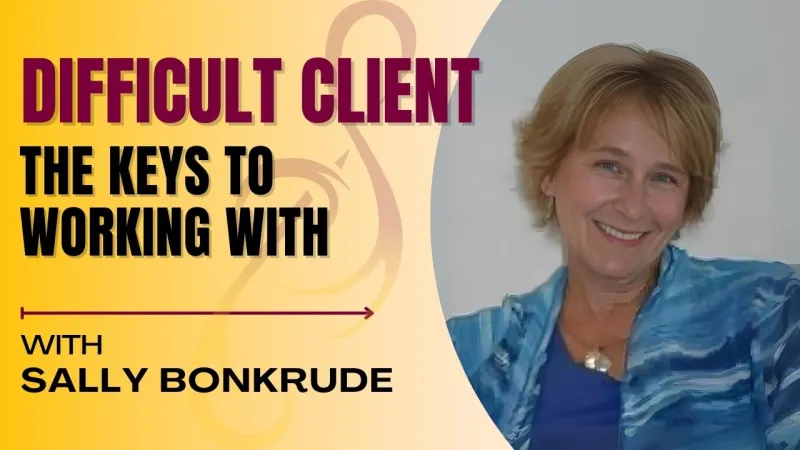
The Keys to Working with Difficult Clients (10 CMTEs)
$250.00
Quantity
The Keys to Working with Difficult Clients (10 credits)
Presented by Sally Bonkrude MA, LPC, MT-BC
Every music therapist encounters sessions that test their confidence.
A client may withdraw, resist, become emotionally overwhelmed, challenge boundaries, reject every intervention you offer, or respond in a way you simply weren’t expecting.
What do you do when your usual approaches aren’t working?
The Keys to Working with Difficult Clients helps you develop practical strategies for staying present, responsive, and therapeutically focused when client interactions or clinical situations become challenging.
You’ll explore how to build trust, rapport, and a sense of safety so clients have a stronger foundation for engaging in the therapeutic process. You’ll also examine your own responses during difficult moments and learn techniques for remaining grounded, authentic, and focused when a session isn’t going according to plan.
Through experiential work with percussion, voice, movement, and improvisation, you’ll discover ways to use music when emotions intensify, communication becomes difficult, or a more structured intervention simply isn’t meeting the client where they are.
You’ll also explore how to reconsider and adapt treatment plans when progress feels stalled, including ways to troubleshoot what isn’t working and identify different paths toward the client’s goals.
Rather than searching for the perfect intervention that will work with every client, you’ll develop a broader set of strategies for responding with flexibility, compassion, patience, and clinical purpose.
In this workshop, you will learn:
Ways to establish trust, rapport, and a stronger therapeutic relationship.
Techniques for staying present and grounded when sessions become challenging or emotionally intense.
How to recognize and respond to your own reactions during difficult clinical interactions.
Ways to use percussion, voice, movement, and improvisation when verbal or structured approaches aren’t working.
How improvisation can create new possibilities for communication, expression, and connection during challenging moments.
Strategies for troubleshooting interventions when a client is disengaged, resistant, or responding unexpectedly.
How to reconsider and adapt treatment plans when progress feels stalled.
Ways to maintain compassion and patience while still working intentionally toward therapeutic goals.
How to become more flexible and responsive when the session doesn’t go according to plan.
You can’t predict every difficult moment. But you can build the skills to meet those moments with greater confidence, flexibility, and purpose.
Here’s What People are Saying:
“This course helped me refocus my thoughts and attitude about my students. I have been in a rut and this course helped me look at my students differently and gave me some new ideas as to how to work with my students. Katherine M.
“I will remember to be prepared by being as healthy and centered as possible before seeing my clients. I have more activity ideas from the class as well – such as refocusing the client with Alzheimer’s Disease from rude behavior to singeing her favorite song.” Robin L.
“This gave me a better understanding of the reasons / causes why people act they way they do at times; how to approach situations to maintain inner composure when in challenging settings. I am able to apply this to all of my daily interactions with clients whether they be in individual settings or in groups. Christina L.
“The openness and acceptance I felt the presenter gave to each of the participants I feel was very positive. The information was well organized, the powerpoint was easy to follow, and I liked that we had a downloadable copy of the powerpoint. I also liked how the presenter used a variety of learning experiences.” Karen A.C.
“The most positive about this course was being able to interact with music therapists from all over the country in the comfort of my own home. Technology is amazing! Sally is an amazing teacher too. She really took her time and made sure that everyone understood the material. I also enjoyed how she took extra time before the class started and after to check in on me and answer any questions that we may have had.” Edele R.K.
Learning Objectives:
Learn musical ways to build trust and rapport
Learn easy to use techniques to stay present, authentic and focused on helping your clients, even in the most difficult situations.
Explore ways to use improvisation to communicate difficult emotions and unresolved inner feelings and to connect with difficult clients.
Learn and experience how to develop and implement a treatment plan that fits the needs of your difficult client.
Schedule
This course consists of 7.5 hours of recordings (split into short segments) and a 1 hour assignment.
CBMT Domain Area(s):
"III.A. Task Statement 33 Utilize evidence-based techniques, including presence, authenticity, and respect, to establish and
maintain trust and rapport with the client; III.A.6 Theoretical frameworks for music therapy treatment implementation (e.g., educational,
developmental, neurological, psychological); Task Statement 34 Recognize one's own professional and personal biases, feelings, and behaviors that affect the therapeutic process (e.g., transference and counter-transference) to maintain boundaries within
the therapeutic relationship; Task Statement 36 Engage the client in individualized music therapy experiences to address the client's established goals and objectives within multiple domains of health and well-being (e.g., psychosocial, physiological, spiritual, musical); III.A.7 Music therapy methods used to support therapeutic outcomes (e.g., improvising, recreating, composing, listening, moving)"
The Keys to Working With Difficult Clients is approved by the Certification Board for Music Therapists (CBMT) for 10 CMTEs-Continuing Music Therapy Education credits. The Spiegel Academy, CBMT Approved Provider #P-106, maintains responsibility for program quality and adherence to CBMT policies and criteria.