DBT Informed Music Therapy Program
Grow your skills, strategies, and confidence
to help clients navigate life’s challenges
Limited to 10 participants.
Enrollment closes March 23, 2026
What exactly is included in this program?
Your Complete DBT Informed Music Therapy Training Package
You get a comprehensive year-long professional training experience - designed to elevate your clinical skills, deepen your confidence, and prepare you to apply DBT skills meaningfully in your work.
Here’s what’s inside:
Weekly live online training sessions with expert DBT-trained faculty
Hands-on implementation support for real-world use
Structured supervision & mentoring with experienced clinicians
Peer collaboration in a supportive learning community
Proven music-based DBT interventions to enhance client engagement
Program completion certificate as a DBT Informed Music Therapist (demonstrated competence required)
1 year Training Program - 100 CMTEs
Clinical Training Coordinator, Temple University
Graduate of the DBT Informed Music Therapy Program
Peggy Tileston MT-BC
shares 4 reasons she recommends this training to every music therapist:
1. Personal Integrity from going through the processes yourself
2. Impressive level of clinical supervision as you work DBT into your practice
3. Going through program with a cohort of peers, resourcing one another in a like- minded community
4. CMTEs
Watch her story >>
Join the movement as we combine DBT skills with
music therapy to help your clients
"build a life worth living!"
Is this familiar?
You discover DBT and realize how much it could help your clients...
So you:
Buy books and scour the internet for ideas
Spend hours experimenting and troubleshooting
Try to piece together DBT and music therapy on your ownst 5

But without a proven, evidence-based system, progress is slow and frustrating.
You may:
Struggle to adapt DBT skills for your clients in a way that actually sticks
Wish you had a ready-to-go set of coping skills for crisis moments
Feel left out of the treatment team conversation because you don’t “speak DBT” fluently
Spend hours reinventing the wheel instead of confidently implementing skills in sessions 5

The Changes This Training Can Bring to You and Your Clients:
Deep Knowledge & Proven Methods
Gain a complete and thorough study of DBT skills with music therapy applications, giving you a repertoire of coping skills to support both your clients and yourself
Learn an evidence-based, tried-and-true system you can adapt to your own clientele to make a greater impact
Applying DBT Skills in Your Practice
Teach DBT skills in the context of music therapy sessions or as a co-leader in DBT skills training groups
Receive a full year of professional supervision while implementing what you learn, building confidence in your ability to apply DBT through music therapy
Become fluent in DBT terminology and collaborate easily with other clinicians to share ideas and strategies that improve client outcomes
Communicate effectively across disciplines and coordinate group planning within the DBT structure so your skills are recognized and valued
Impact on Client Outcomes
Help clients manage crises and regulate emotions, thoughts, behaviors, and actions, leading to greater stability and fewer hospitalizations
Select the right DBT skills to use when clients present with different issues and behaviors
Create and implement effective music therapy interventions within the DBT framework so clients learn and remember skills they can use in daily life
Career Growth & Recognition
Attract new clients and income opportunities by joining existing DBT programs or integrating DBT into your private practice
Maintain high standards of excellence through advanced training and education.
Feel confident in your role as a DBT Informed Music Therapist, knowing how to work within a DBT milieu or apply DBT in your own music therapy practice
Earn a credential from The Spiegel Academy recognizing you as a DBT Informed Music Therapist with demonstrated competency in DBT practice
Hear from Graduates of the Training
"This is a very well put together program
and the instructors are impressively knowledgeable - at the top of their game."
I learned a new skill set that I had never learned before in school or anywhere. The DBT skills are very useful and applicable with all populations. Being able to have all the skills for mindfulness, distress tolerance, emotion regulation and interpersonal effectiveness to integrate into my music therapy has helped me address behavior, emotion regulation and communication issues with my clients."
Rachael Williams MT-BC
"This DBT informed Music Therapist training has been profoundly beneficial both personally and professionally. My intention was to learn tools to use with my clients, which I have, and the supervision has been priceless. The bonus to me is being able to implement the skills myself and how it has improved my own life."
Betsey Carle MT-BC
"The DBT Informed Music Therapy Program I completed at the Spiegel Academy is the best music therapy training I have ever taken..."
"I not only earned 100 CMTEs in a year, for a very comparable price I might add, but I now also have a credential and an effective evidence based skillset to use with a wide variety of populations."
Stephen King MT-BC
"I indeed learned common language to use so that I am better able to communicate with other therapists."
Diana Gross MT-BC
"Since taking the training from The Spiegel Academy, I developed a DBT skills group with the psychologist. We did research to show the effectiveness of combining music therapy with traditional skills training. "
Lindsey Landeck MT-BC
"I am very excited to see the partnership of DBT skills and MT interventions emerge as what is sure to be a frontrunner in best practices of care."
Kirsten Sorensen, MT-BC
Ready to Create Your Own Success Story?
The DBT Informed Music Therapy Training Program
is limited to 10 participants per cohort.
Your first step is to apply for the program.
Frequently Asked Questions:
Will I be able to run DBT skills groups as a result of this training?
The multiple layers of this program give you the ground work to learn, understand, and apply DBT skills in your practice.
The curriculum is designed to delve into DBT skills straight from Linehan’s work through independent reading, working the skills step by step to deepen ways to understand, practice verbiage to teach them, explore personal use in a skills-training group like setting, and practice application as a music therapist.
Supervision rounds out the training over several months to solidify and strengthen confidence in teaching DBT skills in your music therapy practice in meaningful application.
How much time will it take?
About 6-8 hours a month.
The first month is for completing the self-study classes. Month 2-12 you'll attend weekly meetings (Monday nights) and complete monthly assignments for learning the skills and how to implement them through music therapy.
Is there any research on DBT and Music Therapy?
In a recent study completed at Kalamazoo Psychiatric Hospital, a music therapist and a psychologist compared traditional DBT skills groups with skills training that included music therapy. The results on client outcomes were favorable for music. The results were published in the Journal of Music Therapy.
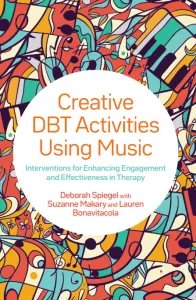
Lauren Bonavitacola wrote about research in the introduction to the book Creative DBT Activities Using Music: Interventions for Enhancing Engagement and Effectiveness in Therapy. You can read what she wrote here.
Who teaches this training, and what are their qualifications?
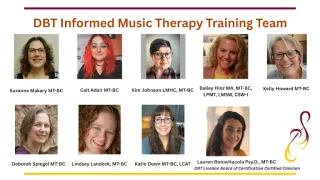
You’ll be learning from a team of board-certified music therapists and DBT-trained clinicians who bring real-world expertise and deep DBT experience.
Deborah Spiegel, MT‑BC (Program Co‑Founder & Lead Instructor)
Board-certified music therapist with over four decades of experience, integrating DBT into clinical work since 2001 and author of Creative DBT Activities Using Music.
Suzanne Makary, MT‑BC (Participant Supervisor & DBT‑Trained MT)
Graduate of our DBT Informed Music Therapy program with extensive experience facilitating DBT‑integrated sessions in behavioral health.
Kim Johnson, MT‑BC, LMHC (Participant Supervisor & DBT‑Trained MT Clinician)
Trained intensively in DBT through Behavioral Tech, applying skills in both music therapy and clinical counseling.
Cait Carter, MT‑BC (Implementation & Q&A Facilitator)
Graduate of our program and the Behavioral Tech DBT intensive, leading hands‑on implementation and Q&A sessions for participants.
Dr. Lauren Bonavitacola, PsyD, MT‑BC (Senior Clinical Advisor)
Co‑creator of the curriculum, now serving as senior advisor providing high‑level clinical consultation and guidance.
Bailey Hinz MA, MT-BC, LPMT, LMSW, CSW-I (Facilitator & DBT‑Informed MT)
Facilitates program training and applies DBT in both private practice and adolescent partial hospitalization programs.
Kelly Howard MT-BC (Customer Success Manager: DBT Support Specialist)
Supports participants from enrollment through completion, ensuring a smooth, well‑supported training experience.
Does DBT only apply to borderline personality disorder?
Not at all. While DBT was originally developed for borderline personality disorder, it’s now used effectively with a wide range of diagnoses and in many settings - including schools, prisons, addiction recovery programs, and general mental health care.
Music therapists and other clinicians also use DBT skills with children, adolescents, adults, and seniors; in hospice; with hospital staff; for wellness and self-development; and with clients of varying abilities.
Here are examples from music therapists who have successfully integrated DBT into diverse settings and populations:
MT in Residential Treatment for Children with Cognitive Delays & Challenging Behaviors - "Bringing what I learned back to the kids, and using it on myself has helped a lot with difficulties in sessions. This is definitely something they need and I was able to adapt it like I adapt anything I do with them."
Chelsea Josephson MT-BC
Adult Acute Mental Health Partial Hospitalization Program - "This training refreshed me with a lot of new ideas, a new direction, and a good understanding. I really appreciated not just reading about it, but the videos and the live feedback. It was very validating because sometimes being the only music therapist you feel on an island by yourself."
Suzanne Makary MT-BC
Adolescent Residential Care: Mental Health w/ Criminal Charges - "I LOVE DBT skills. They are helpful for anybody on so many levels."
Victoria Mierlak MT-BC
Is it worth it for me?
Having this skillset is a really important way to expand the way you can help your clients. When you invest in yourself its going to apply to not only to any clinical work that you do but to help you in your own life. You can be a role model for people in your life and watch the impact you make.
Your Training Journey:
This is a comprehensive year long training that will transform your life and give you unique professional qualifications. We've divided it into 3 parts, designed to take you step by step so you get the best experience to help you learn the skills and confidently apply them with music therapy.
Part 1 – Foundations (March-April)
Self‑study DBT & mindfulness courses + music‑based interventions to use immediately.
Part 2 – In‑Depth Skills Study & Supervision (May-Sept)
Weekly skills training, case application, and monthly supervision.
Part 3 – Implementation & Support (Oct-March)
Weekly scenario‑based practice, individualized supervision, and faculty guidance while applying DBT‑informed interventions in your setting.
Finale – Credential
Endorsement as a DBT Informed Music Therapist.
To open a detailed program page with exact dates...click below:
Your Investment in Professional Growth
In this program, you are not just paying for training - you are investing in a year of expert mentorship, a full DBT skills foundation, music therapy applications, and a supportive professional network that will serve you for years to come.
Your investment covers the full year-long DBT Informed Music Therapy Training, all 100 CMTEs, and every included bonus. Spots are intentionally limited to keep the training personal and interactive.
Your DBT Informed Music Therapy Training Program Includes:
100 CMTE credits through a comprehensive, year-long training
Self-study DBT & mindfulness courses for a confident start
Weekly live training, case applications, and supervision with DBT-informed MT faculty
Implementation support so you can apply skills right away
A full year of mentoring, peer collaboration, and faculty feedback
Proven music-based DBT interventions for client engagement and retention

BONUSES INCLUDED IN YOUR ENROLLMENT:
1-year DBT Music Therapy Resource Hub membership
for session planning and use in therapy
Neurodiversity & modified DBT techniques training
2 tickets to virtual DBT MT retreat
for new ideas and strategies on using DBT with various populations
Online community forum & intervention debriefs for extra feedback from our team
FAST ACTION BONUSES:
Ethics class -meets recertification requirement.
(Exclusive to those enrolling during your discovery call)
Mindfulness 6-week program template with interventions & assessments (Early bird bonus if you register before March 23, 2026)
Value of the training
$7,448
+
Value of the bonuses
$4,997
=
Total Training Value
= $ 12,345
Your Investment Options:
___________
Payments:
$5,500
$1,000 down
+ monthly payments
___________
Pay in Full:
$5,000
save $500
___________
This program is for clinicians who already hold a credential as a Board Certified Music Therapist
(or a credential in another discipline such as art therapy, dance therapy, recreation therapy). *
Course Materials (not included in tuition):
Skills Training Manual for Treating Borderline Personality Disorder $45
DBT® Skills Training Manual, Second Edition – $64
DBT® Skills Training Handouts and Worksheets, Second Edition – $46
Creative DBT Activities Using Music: Interventions for Enhancing Engagement and Effectiveness in Therapy $30
Need Employer Support?
Ask Your Boss to Pay for Your Training
Many participants secure full or partial funding from their employers.
1. Use the following script when you talk to your employer about the training and request funding. (Edit it to suit your situation.)
2. Share the Employer Overview Page to start the conversation. (Print it or email it directly to your decision‑maker.)
📄 [Download ask your boss Script]
📄 [Download one pager for employer]
🔗 [Visit the Employer Overview Page] (TheSpiegelAcademy.com/employers)
Need Buy-in from Your Significant Other?
Need to Ask your Significant Other for Support?
If your partner is part of your decision‑making process, we’ve made it easier for you to share why this training matters to you and your career.
Download this partner support script - it will help you explain your goals, the program benefits, and why investing in this training is worth it for your future.
Our commitment is to support music therapists in making a greater impact.
We are eager to collaborate with you to make your participation a reality.
Invest in yourself.
Commit to yourself.
Say yes to yourself, your clients, and this opportunity.

Hundreds of people like you have invested in our DBT Informed MT classes since 2011. We know that if you enroll and participate in this entire program, and apply yourself, you will be thrilled with the results. If you find that this program doesn’t feel like a good fit for you, you have 14 days after the first day of starting the first class to get 100% of your money back. After that time, you will be able to transfer to any other classes of your choice of the same credit value from our catalog. No hassle.
You have nothing to lose, and so much to gain!
Not sure? Still on the fence? Want to learn more ...
Schedule a time on the calendar to chat with a member of my team and find out how this training impacted their practice and their own life. Get answers to your questions and you can decide together what your next best step is on your DBT in MT journey. If this training is a good fit for you, our team will help you take the next step and you'll be on the road to a powerful transformation..
I look forward to meeting you!
Deborah Spiegel

Learning Objectives
• Students will be able to describe DBT Skills from each skills module and create interventions for each to implement with client populations they serve in their music therapy practice.
• Students will demonstrate ability to implement DBT skills using music to meet treatment goals with a variety of scenarios across multiple populations
• Students will demonstrate competence by submitting a case study conducted over a 6 month period collecting data to support the outcomes from the application of skills and music interventions addressing treatment goals in each of the 4 modules of DBT Skills training and present in written format.
• Students will participate in real time online classes once weekly for one year to receive instruction, supervision, and peer collaboration opportunities..
CBMT Domain Areas
III.A.6 Theoretical frameworks for music therapy treatment implementation (e.g., educational, developmental, neurological, psychological); III.A.7 Music therapy methods used to support therapeutic outcomes (e.g., improvising, recreating, composing, listening, moving); II.D.2 Individualized treatment planning using evidence-based practices (e.g., professional expertise, research evidence, client preferences): Task Statement 29 Design experiences to facilitate generalization or transferability of skills across clinical/non-clinical contexts when appropriate
II.B-5 Client responses to musical elements and non-musical treatment experiences (e.g., physical, behavioral, social) II.B-6 Needs assessment within multiple domains of health and well-being (e.g., psychosocial, physiological, spiritual, musical) ; III.A-3 Treatment modification within and across sessions based on the client's response and growth (e.g., alternate applications of music, appropriate music selection, adaptation of the physical/virtual session space)
II.B-5 Client responses to musical elements and non-musical treatment experiences (e.g., physical, behavioral, social) II.B-6 Needs assessment within multiple domains of health and well-being (e.g., psychosocial, physiological, spiritual, musical) II.D.2 Individualized treatment planning using evidence-based practices (e.g., professional expertise, research evidence, client preferences): III.B-1 Documentation processes and tools; III.B-2 Methods of clinical observation and data collection to document the client's progress or outcomes; IV.A-1 Data analysis methods and tools used for evaluation; IV.A-2 Interpretation of empirical data (e.g., baseline data comparison, observed progress toward goals, biases; IV.A-6 Evaluation of the treatment plan related to the client's determined goals; IV.A-7 Generalization and transferability of treatment experiences across non-clinical contexts
V.A-1 Resources for continuing education (e.g., lessons, self-study, approved continuing education courses for music therapy); V.A-4 Evidence-based research and current professional practices in music therapy; VA-5 Resources for professional growth (e.g., mentoring, clinical supervision)